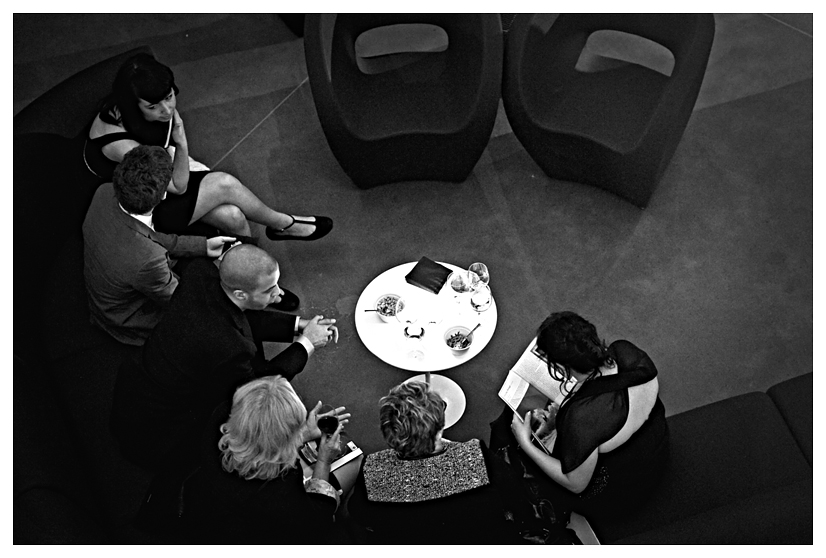
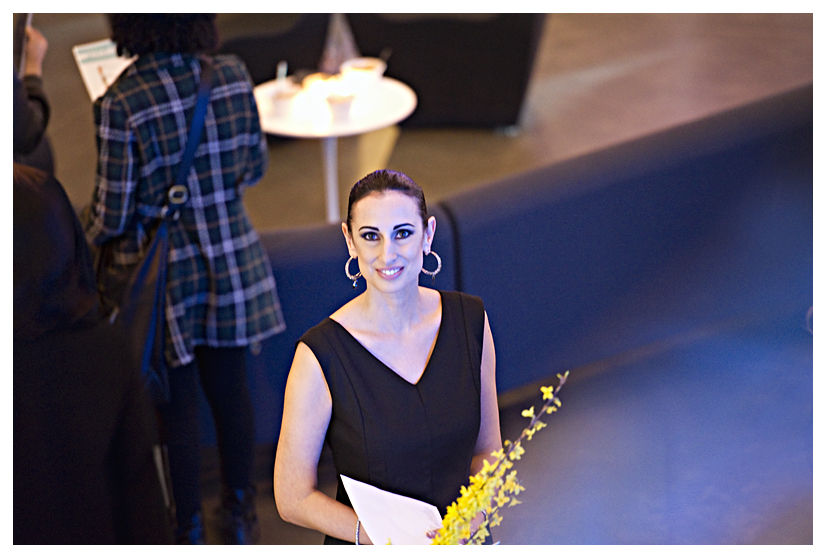
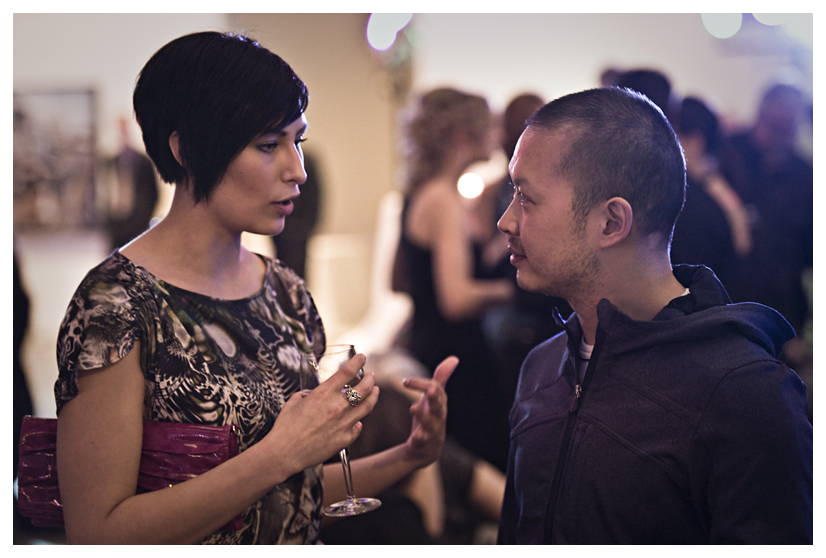
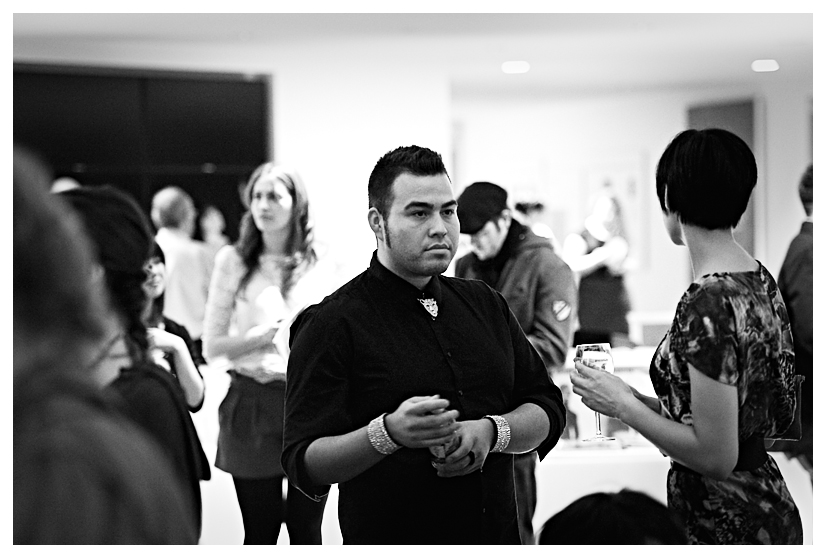
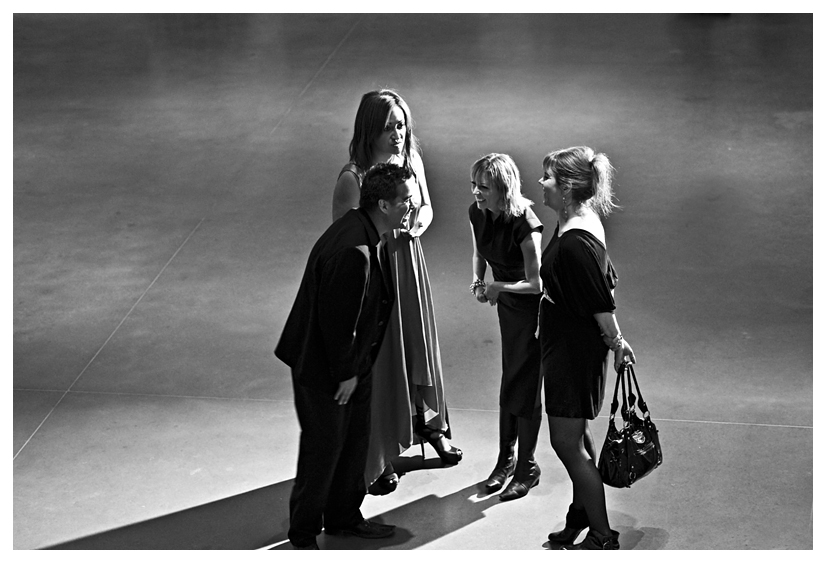
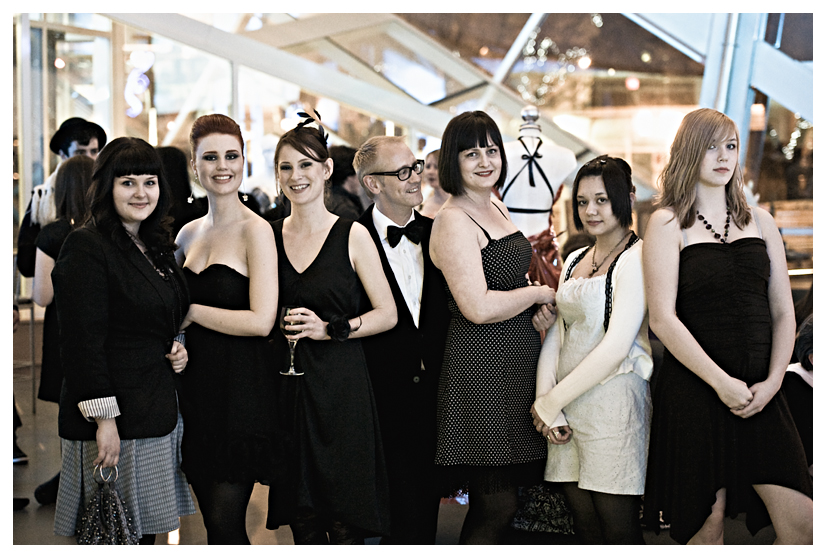
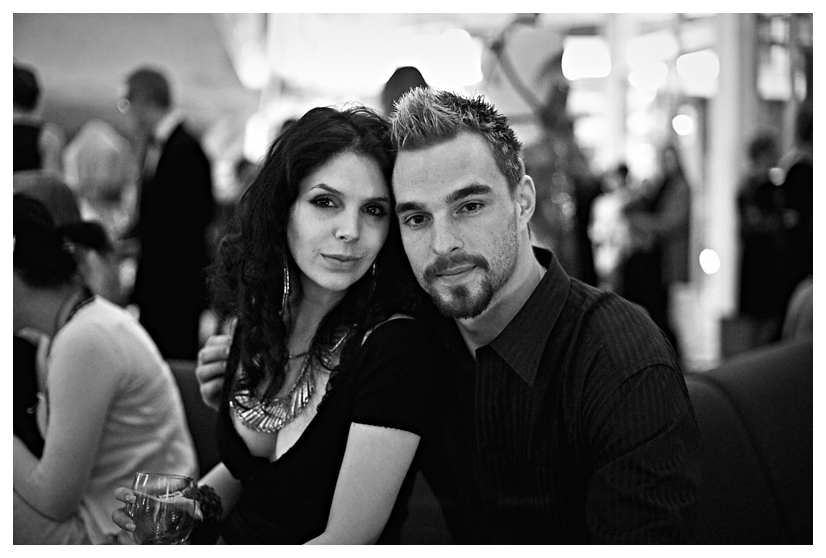
Saturday night I was invited to shoot at a magazine launch, Phabrik, being hosted by Western Canada Fashion Week. They were holding it at the newly opened Alberta Art Gallery here in Edmonton which makes for an beautiful venue.
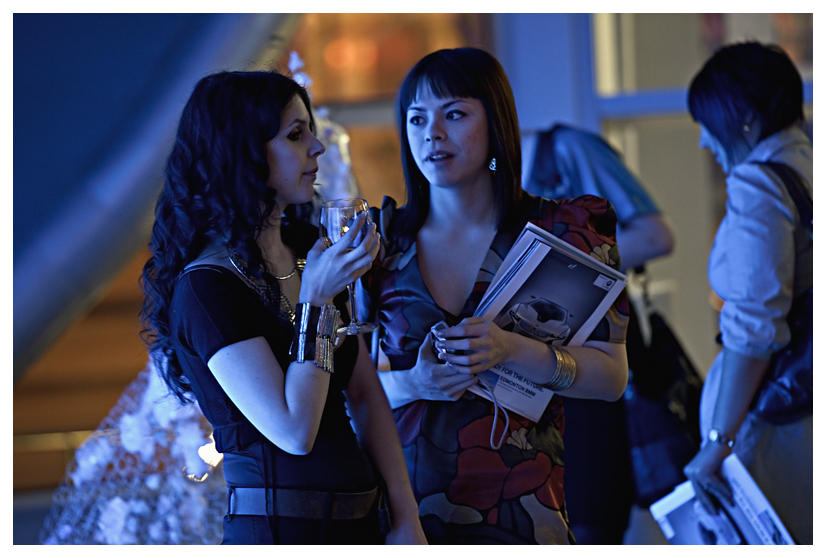
There were a number of us photographers attending so rather than try and cover it all I had decided to cover mainly the interaction of people and leave the other aspects to some of the others since we were all working together anyways. I saw this as a good chance to experiment as well as trying to push my camera to some of its strengths.
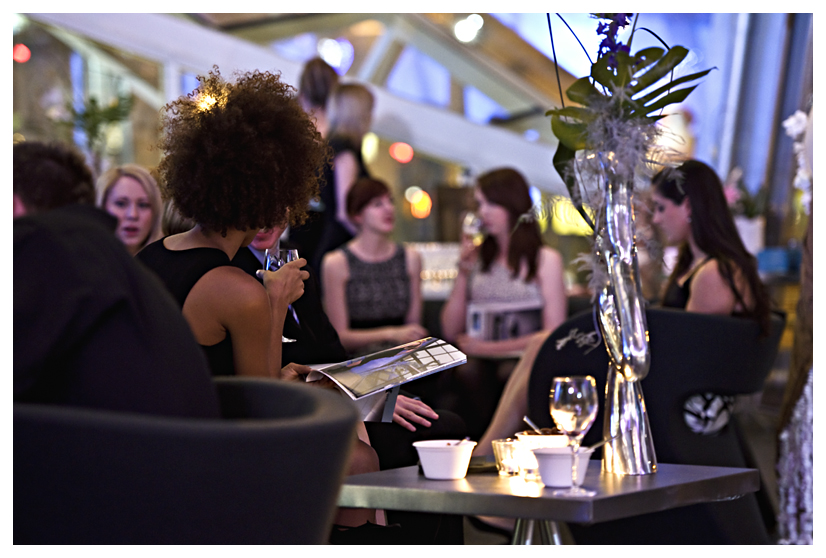
I had recently purchased the 70-200mm f2.8 VR II for the D3s, in part to situations as these. The venues lighting conditions were, to put it nicely, very moody, aka very little light. While I'm not against using flash what so ever in this particular case I wanted to experiment just going off ambient and seeing what the camera and lens could do. Even though I'd probably regret it I ended up intentionally leaving my wireless transmitters at home so I wouldn't fall back on the flash.
In regards to using some fill flash the setup of the venture made it a little difficult. The ceilings were very high and the majority of the area was open space, making it difficult to bounce flash off of a wall. Doing it straight on worked but resulted in images that were a little too flat for my tastes. Carrying around the 70-200 would have made it difficult to handhold a flash anyways.
So I went without and worked with the light that was available for better or worse. I have to say I was impressed with the performance of the camera and lens. The AF had little to no problem keeping up with focus in the extremely dark conditions. The VR which was marketed as able to provide around 4 full stops of Vibration Reduction completely impressed me. I hand held some shots at 1/13th of a second @ 200mm and still got sharp results, something I had a lot of trouble doing when I was shooting on the Canon side. Granted I did not have an IS lens at that time but even then I couldn't even dream of getting some of those results. As for the ISO performance on the D3s it definitely kept up. There were shots between ISO 3200 and 12,800 which showed very little noise. What noise there was can easily be cleaned up in post processing.


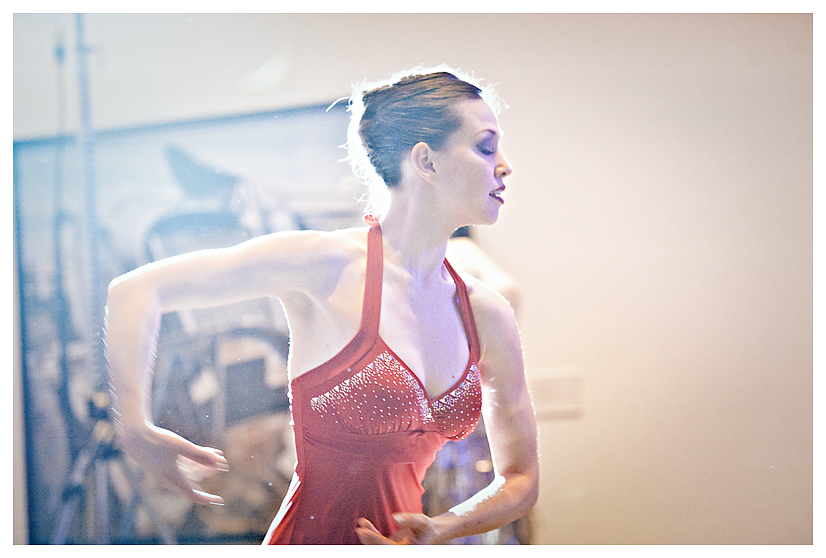
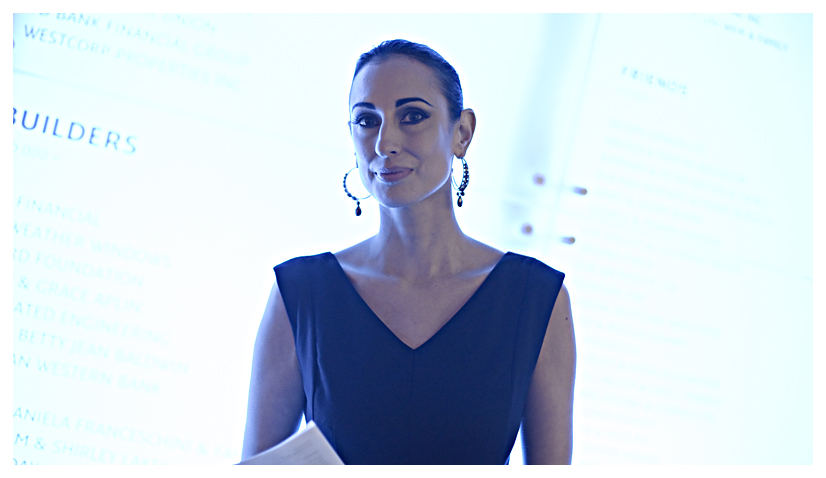
At one point of the night there was a ballet performance right in the middle of the dimly lit room. In order to freeze the action I had to shoot at a higher speed, I cranked the ISO to 12,800 and got some great results. I found that really impressive given the circumstances of being in a venue with lighting not specifically tailored for that sort of performance. Having that sort of flexibility in the camera reminds me why I invested in it.
After yesterday I'm no longer particularly worried about shooting the ceremony side of a wedding in a church which prohibits the use of flash. Being able to shoot at 200mm, 1/20th of a second at f2.8 and ISO 6400 and still get quality images will make life easier. In the end it gives me more freedom to worry about composition.
Otherwise it was an interesting night. I got a chance to meet the mayor and grab some shots of him. That in itself was kind of a bit of a wake up call, a realization of not having a second chance at some of these shots.
One other aspect that I'm not too used to quite yet is approaching people I would like to use for models sometime in the future. Oddly enough I don't feel out of place asking those advertising themselves as models, even given the idea they probably on a regular basis work with photographers much more talented than me. Coming across people in every day situations always feels a bit more daunting though. Perhaps it's the notion of not wanting to come off as some creep with a camera or the fact that I really need to make a new business card already, something that looks a lot more professional than my old one.
Luckily though I'm slowly getting rid of that mentality and approaching some of these people. The fact that some of them I probably won't run into again and others are incredibly hard to come by has made me realize I need to take some initiative and make it happen.


What I want to do now is learn how to develop the photos to have a greater tonal range and get more knowledge on evening out the white balance. While I fully understand the concept of doing so using gels on flash getting good results out of the camera in which the conditions and colors are continually changing is another thing on its own. It's still something I can't control anywhere near as well as I'd like. Though perhaps it's just the nature of the beat shooting with some many different colors of light in one scene. You can only go so far.
Posted in
black and white,
canada,
color,
edmonton,
EFW,
event,
Fashion,
flickr,
fukanzen,
hikari studio,
mariusz,
mariusz sikorski photography,
nikon,
photography,
sikorski,
Western Canada Fashion Week


The past few days here in Edmonton has seen some beautiful weather, at least for this time of the year. With temperatures hovering around 5°C and a little free time I've finally managed to explore the area around where I live. Being quite close the North Saskatchewan River it's a little surprising I have yet to find a way to the river since moving here.
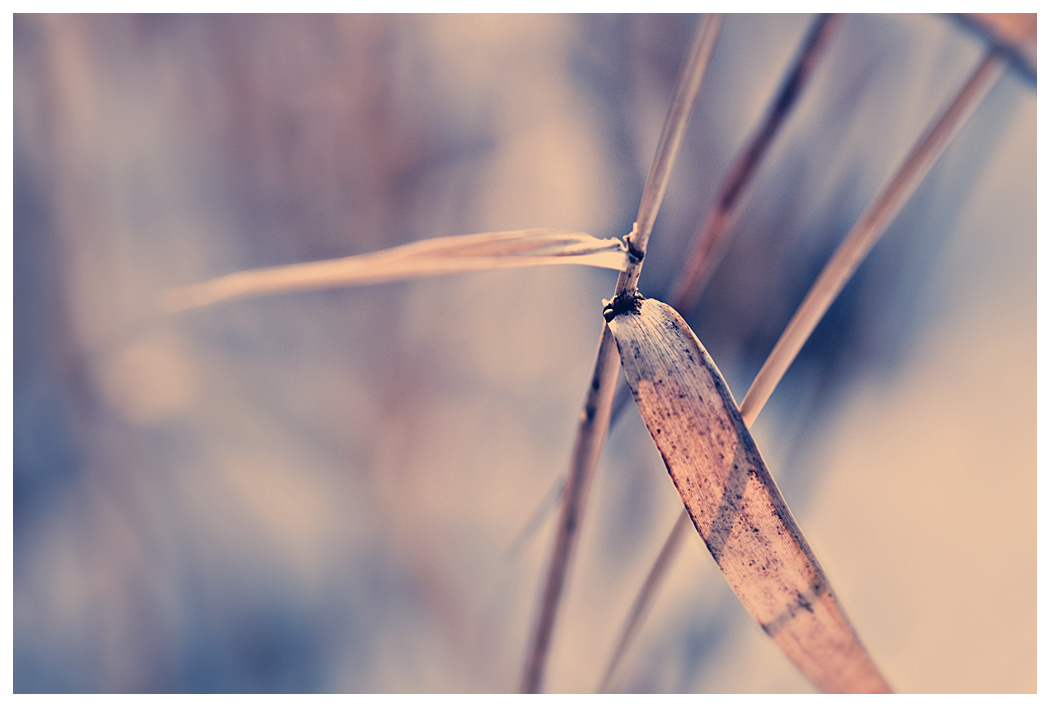
It's not exactly accessible on this side of town, most of it is still under construction so there are no parks or bike paths that run along side it as other parts of town. Regardless, there turns out to be a residential area, of the country variety, that runs not far from it. A testament to the serenity of the area, I spotted a couple of deer grazing near the forest as I arrived. It had only been about 5pm. Unfortunately, they ran off by the time I got out of my car. Not that I was equipped for the shot anyways, having only brought with me the 105mm f2.8 Macro lens.
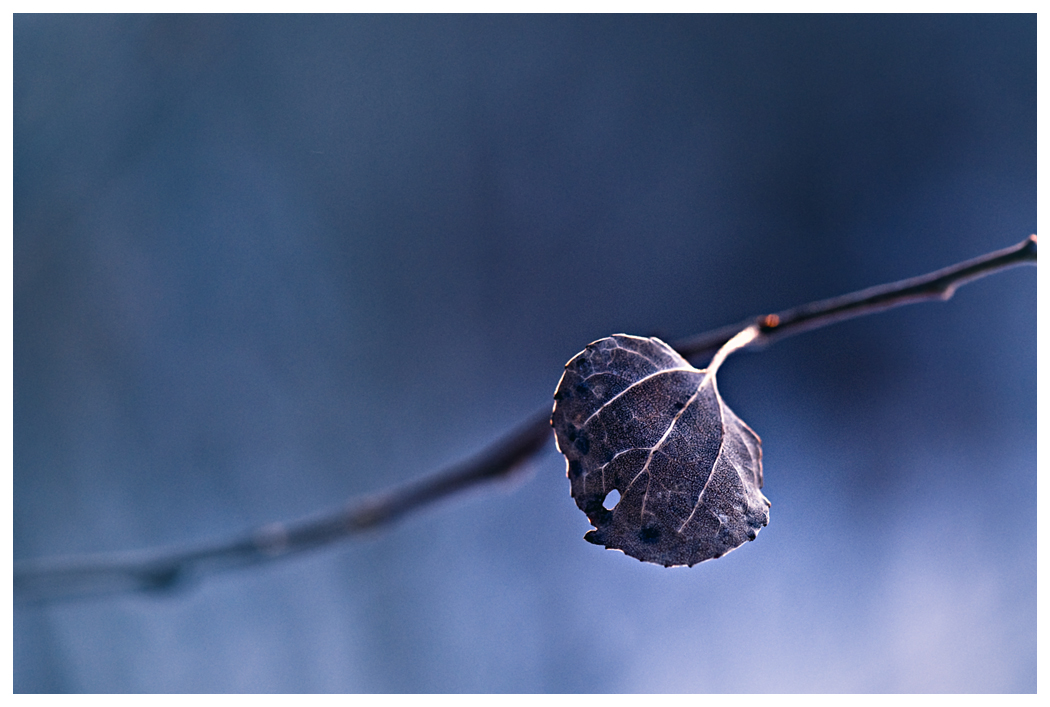
I had wanted to test this lens out for a series of shots in a similar vein to ones I had taken the past fall. At the time I was experimenting with using dried or dead leaves in a variety of environments. I had wanted to continue this through out the entire year, capturing the leaves in the different seasons and states.
I got a few shots in and definitely want to explore the area a bit more this week. There's a lot of beauty to be found there.
As for the lens, I'm really starting to warm up to it. The pictures I was shooting in Fall of last year were done on the 16-35mm f2.8, mainly on the 35mm end of the scale but even though the lens had a really small minimum focus distance the length of the lens limited the amount of out bokeh I was able to get. With the 105mm lens it is a lot easier to isolate the elements, maybe even too much so.
Posted in
alberta,
canada,
color,
cross process,
edmonton,
flickr,
fukanzen,
hikari studio,
mariusz sikorski photography,
nikon,
photography,
post processing,
sikorski

Aside from the fairly obvious easy to organization another important part of it is when you're using sites like flickr.
Plain and simple: It will help get your image seen.
Last year I had someone contact me via flickr asking if a particular shot of mine was available in a larger size and am I willing to sell usage rights for the image. After doing some research on the person/company making this offer it turned out to be a group working out of British Columbia. The company was actually pretty prominent in the advertising world.

To make a long story short I ended up selling the usage rights to the image to them, twice to be exact. They had wanted the image to be a part of promotional material being put together for the Government of Alberta promoting the province of Alberta. The second time they had contacted me was to extend the rights to posters and billboards, something that was not mentioned in the original usage rights.
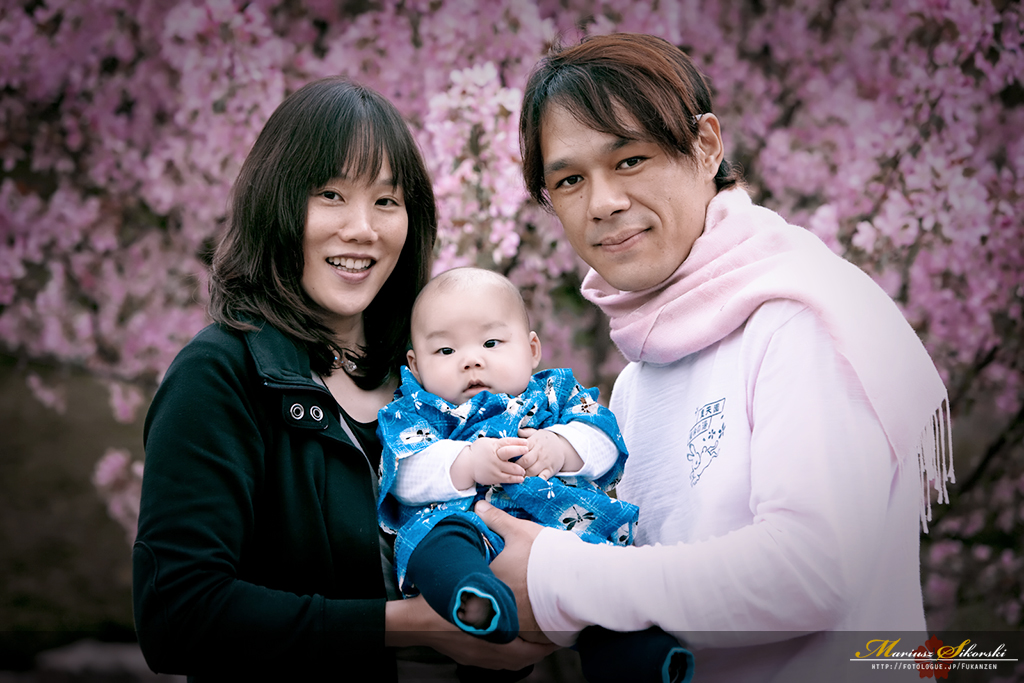
Companies watch sites like flickr and do contact users. Tagging your photos with appropriate keywords plays a key role in having your photos seen on such sites.Spent the extra few seconds to tag your photos properly. It might make you some money or bring you attention in the long run.
Posted in
alberta,
canada,
edmonton,
flickr,
flowers,
fukanzen,
japanese,
mariusz,
mariusz sikorski photography,
photography,
sakura,
tagging

When it comes to workflow I am still in the process of reorganizing mine. It has taken some rearranging at the foundation due to resorting to filter packages more as of late as well as making the switch to Nikon.
One of the fundamental first steps thought is trimming the fat, that is after importing and backing up my files from a shoot I have gotten to making several passes through all the shots from a shoot and using the Library filters in Lightroom to bring together only the shots I feel are the best ones I captured that shoot.
Everyone has their own method of doing this, as always I suggest experimenting and seeing what works best for you. There are a lot of redundant ways to do it to cater to each photographers tastes and needs.
In my case I look over the photos quickly in the Library tab in Lighroom. I make several passes starting out with the out of focus shots, under exposed, over exposed, motion blur etc etc. Mind you sometimes these type of shots aren't unwanted, however in the general sense that's what I watch out for. I set "rejected" flags on these photos. It's nice, simple and quick since I can just use the keyboard to scroll between pictures and set flags. At the end I can just Filter Lightroom to display the rejected images and delete those altogether.
After that I do another pass through, this time paying a bit more attention to actual elements within the shots. I look for big distracting elements I may not have caught, bad framing, lack of focus etc etc. This pass through is usually pretty quick as well. I generally also have a habit of setting these as rejected. I tend to be quite conservative in terms of what I flag for rejected since I will be deleting it so the criteria for getting the rejected flag is usually pretty blatant.
I make it a habit to delete the photos that were rejected by this stage. For the next passes I continue to flag the unwanted pictures as rejected however I do not delete them anymore. I set the filter to only display flagged or unflagged photos. Now when I set an image as rejected it will not show in my library (but is still there). It helps to clear up the clutter and distractions as I go.

From here on in all the passes I make are comparing the shots around it. I match up similar shots and keep the one I feel is better. These passes of course take a bit more time and involve zooming in and checking the smaller details.
Eventually after a few more I bring it down to a much smaller number than what I had originally started with, making sure I only bring my best shots to the table. Not only does this create an environment that's much easier to work in, it also helps to tie the shoot together. I find personally that this sequence works a lot better for picking out the best shots in a shoot rather than going through all the shots and just picking the best ones. You end up putting a lot more thought and consideration into each individual shot this way. It also makes for a better presentation when handing a CD of proofs to a client. Although, in that scenario I end up being a lot more liberal as to what I don't reject.
Posted in
flickr,
fukanzen,
lightroom,
mariusz,
photography,
sikorski,
tips,
tutorial,
workflow